
When designing or renovating a staircase, most homeowners focus on style, layout, and finishes. But one factor that often gets overlooked is climate. The reality is, your environment plays a major role in how well your staircase holds up over time. Choosing the right staircase materials isn’t just about aesthetics—it’s about durability, performance, and long-term value.
Whether you live in a coastal area, a humid region, or a place with extreme temperature changes, understanding how climate affects your staircase can help you make smarter decisions from the start.
How Weather Affects Wood Stairs
Wood is one of the most popular staircase materials thanks to its natural beauty and versatility. However, it’s also one of the most sensitive to environmental conditions. Understanding how weather affects wood stairs is key to preventing common issues like warping, cracking, and expansion.
In humid climates—like many coastal areas—wood tends to absorb moisture from the air. Over time, this can cause stairs to swell, shift, or even develop mold if not properly sealed. On the flip side, in dry climates, wood can lose moisture, leading to shrinkage and cracking.
Temperature fluctuations can also take a toll. Repeated expansion and contraction from changing weather conditions can weaken joints and loosen components, especially in lower-quality builds.
This doesn’t mean wood isn’t a good option—it just means it needs to be properly treated, installed, and maintained based on your environment.
Choosing the Best Materials for Stairs in Different Climates
So, what are the best materials for stairs when climate is a concern? The answer depends on your location and how exposed your staircase is to the elements.
- Coastal & Humid Climates:
Materials that resist moisture are essential. Sealed hardwoods, engineered wood, metal, and certain composites perform well in these environments. Stainless steel and powder-coated metals are especially resistant to corrosion caused by salty air. - Dry & Hot Climates:
In areas with intense heat and low humidity, materials that won’t crack or warp easily are ideal. Engineered wood, metal, and even concrete elements can offer better stability than traditional solid wood. - Cold or Variable Climates:
Regions with fluctuating temperatures require materials that can handle expansion and contraction. Properly installed wood with room for movement, as well as metal components, can perform well when designed correctly.
If you’re unsure what works best, consulting a professional can help you avoid costly mistakes.
Staircase Materials for California Homes
California presents a unique mix of climates—from coastal humidity to dry inland heat and even wildfire-prone areas. That’s why selecting the right staircase materials is especially important for long-term performance.
For coastal areas like Southern California, where salt air and moisture are factors, we typically recommend sealed or engineered wood paired with stainless steel or powder-coated metal components. These materials help resist corrosion and reduce the impact of humidity.
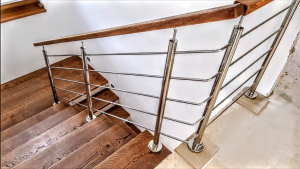
Stainless steel and coated metals resist corrosion better than untreated steel in salty air.
In inland or hotter regions, where temperatures can fluctuate and air is drier, engineered wood is often a better choice than solid hardwood. It’s more stable and less prone to cracking or shrinking. Metal elements also perform well here, offering durability with minimal maintenance.
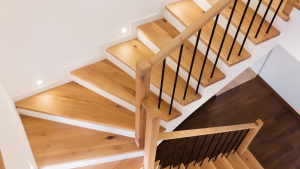
Hardwood performs well in inland or hotter regions because the lower humidity reduces swelling and warping, keeping the material more stable and durable over time.
For homes in fire-prone zones, incorporating non-combustible materials like metal can add an extra layer of resilience. While design is always important, durability and safety should guide your material choices in these environments.
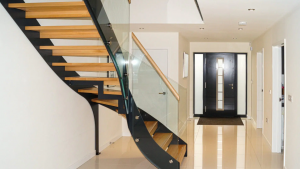
Metal and glass are non-combustible, helping reduce flame spread while maintaining structural integrity under high heat.
Ultimately, the best materials for stairs in California are those that balance style with the ability to handle the state’s varied and sometimes extreme conditions.
Balancing Style and Durability
It’s easy to fall in love with a staircase design based on looks alone, but durability should always be part of the conversation. The best staircase designs strike a balance between visual appeal and long-term performance.
For example, a light, airy wood staircase might be perfect for a beach home—but without the right finish or treatment, it may not hold up to coastal humidity. Similarly, sleek metal railings can offer a modern look while also providing resistance to environmental wear.
By choosing staircase materials that align with both your design goals and your climate, you can create a staircase that looks great and lasts for years.
Planning for Long-Term Performance
Climate isn’t something you can control—but it is something you can plan for. Taking the time to understand how weather affects wood stairs and other materials will help you make smarter decisions during your renovation or build.
Regular maintenance also plays a role. Sealing wood, checking for wear, and addressing small issues early can extend the life of your staircase significantly.
Plan Your Project with the Right Team
Choosing the best materials for stairs starts with understanding your environment—and that’s where expert guidance makes all the difference. At Beach City Stairs, we design and build staircases specifically for California homes, taking into account coastal conditions, dry climates, and everything in between.
Whether you’re planning a renovation or starting from scratch, our team can help you select staircase materials that balance style, durability, and long-term performance. From material selection to final installation, we’ll ensure your staircase is built to handle the conditions it faces every day.